
At the end of Highway 56, weather is not background scenery. It becomes part of the family calendar: before the storm, after the storm, and the year the camp was rebuilt.
The Alibi was established in 1986. Since then, its story has unfolded on one of Louisiana’s most exposed stretches of coast. Hurricanes have changed buildings, docks, shorelines, and familiar views. They have also made ordinary weekends at camp feel a little more valuable.
The official record tells us when the storms formed, where they made landfall, and how strong they were. The The Alibi family archive tells a smaller and more personal story: high water around the camps in 2017, repairs after nearly every one of them, and the scene in Cocodrie the morning after Hurricane Ida.
Not every repair can be assigned to one storm, and not every high-water day had a hurricane’s name. This is not a damage ledger. It is the story of how weather divided time into chapters, and how the camp kept beginning again.
The year before The Alibi began: Juan, 1985
Hurricane Juan spent the closing days of October 1985 looping slowly and erratically near Louisiana. It made landfall south of Patterson in St. Mary Parish on October 29 as a Category 1 hurricane, but its wind category tells only part of the story. Juan’s slow movement produced days of rain, flooding, and dangerous water along the coast.
National Weather Service records say the storm surge reached eight feet at Cocodrie. The Alibi did not yet exist; the camp was established the following year. Juan belongs in this history because it shows the landscape into which The Alibi was born: beautiful, productive, and always exposed to water pushed in from the Gulf.
Andrew, 1992: an eight-foot storm surge
Hurricane Andrew made its Louisiana landfall near Point Chevreuil, about 20 nautical miles west-southwest of Morgan City, early on August 26, 1992. It arrived as a Category 3 hurricane with sustained winds of 115 mph.
The National Hurricane Center recorded an eight-foot storm surge at Cocodrie. Storm tide is the precise term: it is the total water level produced by the astronomical tide and the storm’s surge together. For a camp near the water, the distinction matters less than the result. Andrew demonstrated how a storm making landfall west of Cocodrie could still push significant water into the community.
2005 and 2008: the centerline was not the whole story
Hurricane Katrina made its first Louisiana landfall near Buras on August 29, 2005. Terrebonne Parish lay on the storm’s western side and was spared the catastrophic damage suffered farther east. Less than four weeks later, Hurricane Rita made landfall in southwest Louisiana. Although Rita’s center was far to the west, its broad circulation pushed water across the south-central coast, overtopped and breached lower Terrebonne levees, and flooded thousands of homes and businesses.
The lesson returned in September 2008. Hurricane Gustav made landfall near Cocodrie on September 1 as a Category 2 hurricane with sustained winds of 105 mph. This time, the official centerline crossed the coast here.
Twelve days later, Hurricane Ike came ashore at Galveston. Its enormous wind field still drove water into south-central Louisiana. Gauges reached about seven feet at Bayou Grand Caillou and Caillou Lake, and lower Terrebonne flooded again. Gustav and Ike, one a direct landfall and the other a distant storm with a vast wind field, made the point plainly: distance from the eye is not the same as distance from the danger.
Water does not need a name
It is tempting to organize coastal history only by named storms. Cocodrie does not work that way.
On April 30, 2017, Stephen recorded high water around the old Camp Alibi. This wasn’t a hurricane. This was strong south winds for multiple days and a high tide. Nothing compared to a hurricane.
Zeta, 2020: a fast late-season hit
Hurricane Zeta made landfall near Cocodrie on October 28, 2020. Early reports called it a strong Category 2 hurricane; the National Hurricane Center’s final analysis raised its landfall intensity to Category 3, with sustained winds of 115 mph.
Zeta moved quickly, but it left a sharp mark. The official report documented significant wind damage in Terrebonne Parish, three to six feet of inundation in portions of Terrebonne Bay east of the center, flooding along Highway 56, and water in the lower levels of LUMCON’s marine center.
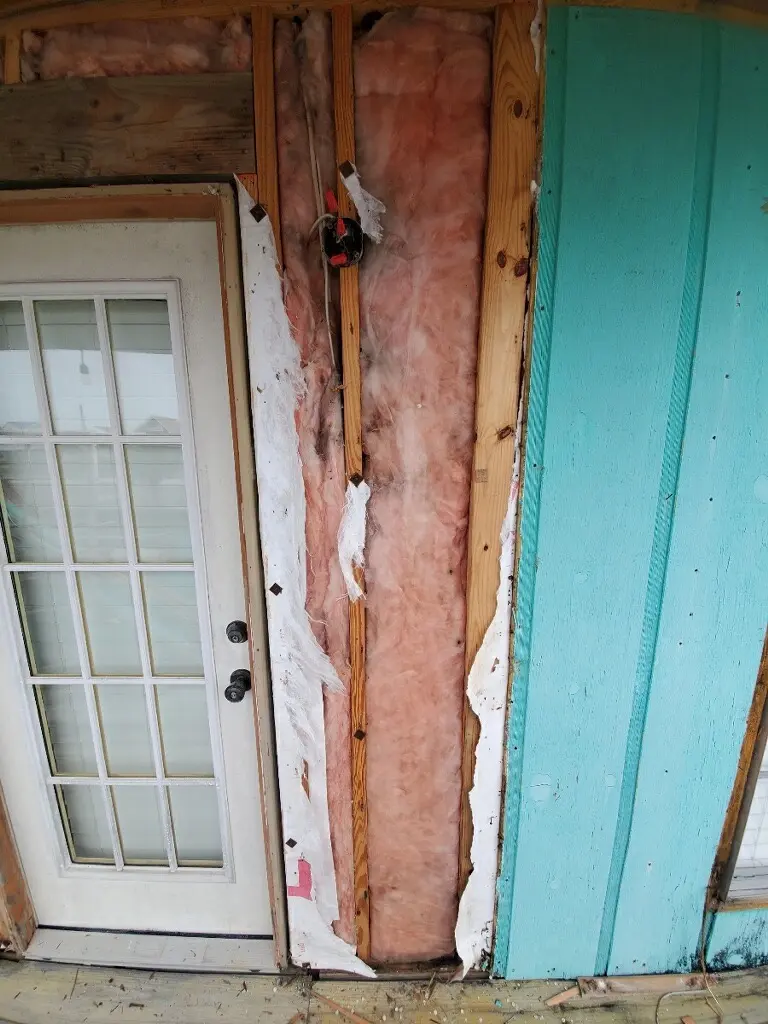
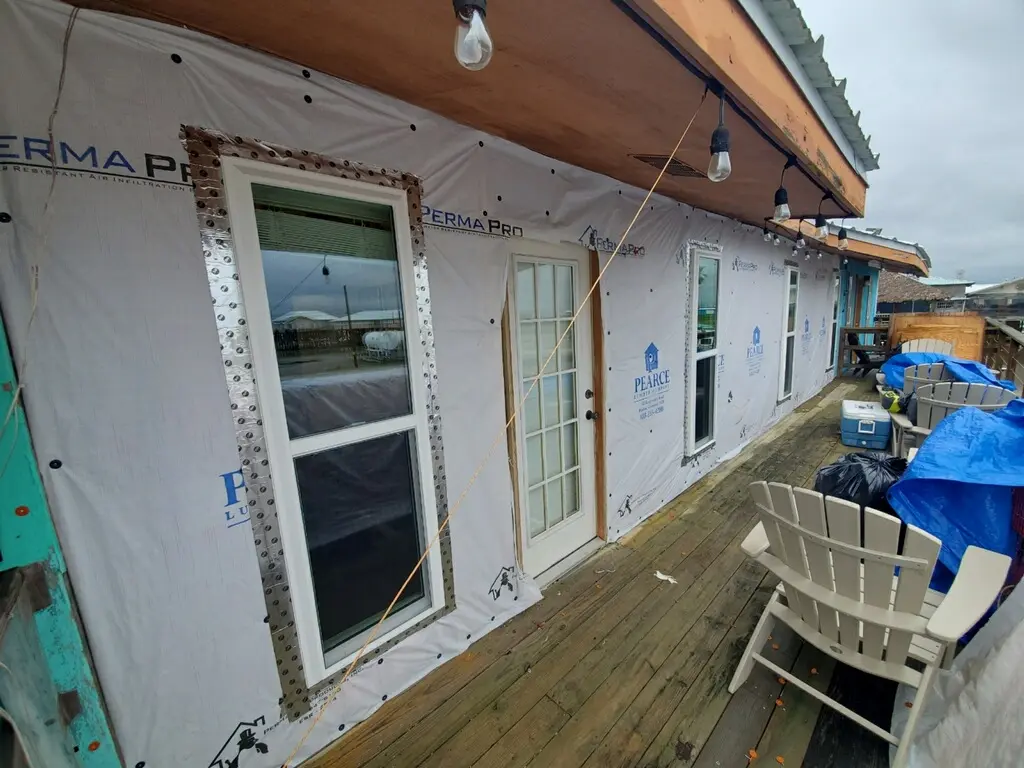
The Alibi archive also preserves exterior repair work at the old Camp Alibi. The below photograph is dated May 2021 and shows a wall opened to framing and insulation. Another shows new house wrap, window installation, and flashing. Rebuilding is part of it if you’re going to have a place down here.
Ida, 2021: the morning after
Hurricane Ida made landfall near Port Fourchon on August 29, 2021, as a Category 4 hurricane with sustained winds of 150 mph. The National Weather Service documented catastrophic wind and surge damage across lower Terrebonne and substantial damage in Cocodrie.
The next morning, Stephen moved through Cocodrie. The video records scattered roofing and siding, open walls, debris, and visibly damaged camps. It cannot identify the history of every structure in the frame or measure the full loss. What it preserves is the scale of the scene people encountered when they returned.
Official reports provide the numbers. This video provides the view.
Francine, 2024, and another reset
Hurricane Francine made landfall in Terrebonne Parish on September 11, 2024, as a Category 2 hurricane with sustained winds of 105 mph. Storm surge entered Cocodrie and Dulac. The Bayou Petit Caillou gauge at Cocodrie reached 7.8 feet on the NAVD88 elevation datum before it failed. Separately, using a different reference point, the National Hurricane Center estimated that water locally reached as high as eight feet above ground near Cocodrie.
By 2026, The Alibi had been completely gutted to the studs and rebuilt. The electrical was removed. The plumbing was removed. The mechanical equipment was removed. Walls were moved, and the whole thing was built again. The project belongs in the camp’s hurricane history without being assigned to one storm. A forty-year-old history speaks for itself. The rebuilt camp records the latest decision: begin again.
What the storms actually shaped
Hurricanes shaped the physical camps over the years, but that is only part of the story. They shaped the way people speak about time. A photograph is remembered as before Gustav or after Ida. A repair helps explain why a wall, window, or dock looks the way it does. Returning after a storm becomes its own kind of family gathering, even when nobody would have chosen the occasion.
The 2026 rebuild did not erase that history. It gave the history a stronger place to live.
The Alibi is not the same collection of boards and siding that stood here in 1986. No coastal camp could be. Its continuity comes from the people who return, the stories that get retold, and the decision that after each difficult chapter there should still be another weekend in Cocodrie.
Forty years after it was established, The Alibi began again. Same water. Same purpose. New walls around the memories.
Sources and further reading
Storm dates, landfall locations, intensities, and water levels come from official NOAA, National Hurricane Center, National Weather Service, and Terrebonne Parish records. The Alibi’s 1986 establishment and 2026 rebuild come from the camp’s family history. Descriptions of the supplied media are limited to their embedded dates and visible contents.
- National Weather Service: Hurricane Juan
- National Weather Service: Louisiana hurricane history
- National Hurricane Center: Hurricane Andrew preliminary report
- National Hurricane Center: Hurricane Katrina report
- National Hurricane Center: Hurricane Rita report
- Terrebonne Parish: 2020 hazard mitigation plan
- National Hurricane Center: Hurricane Gustav report
- National Hurricane Center: Hurricane Ike report
- National Hurricane Center: Hurricane Zeta report
- National Hurricane Center: Hurricane Ida report
- National Weather Service: Hurricane Ida in southeast Louisiana
- National Hurricane Center: Hurricane Francine report